
Interview: Rachael DeCecco
Once dubbed The Freshman, DeCecco is now every bit the professional our sport needs

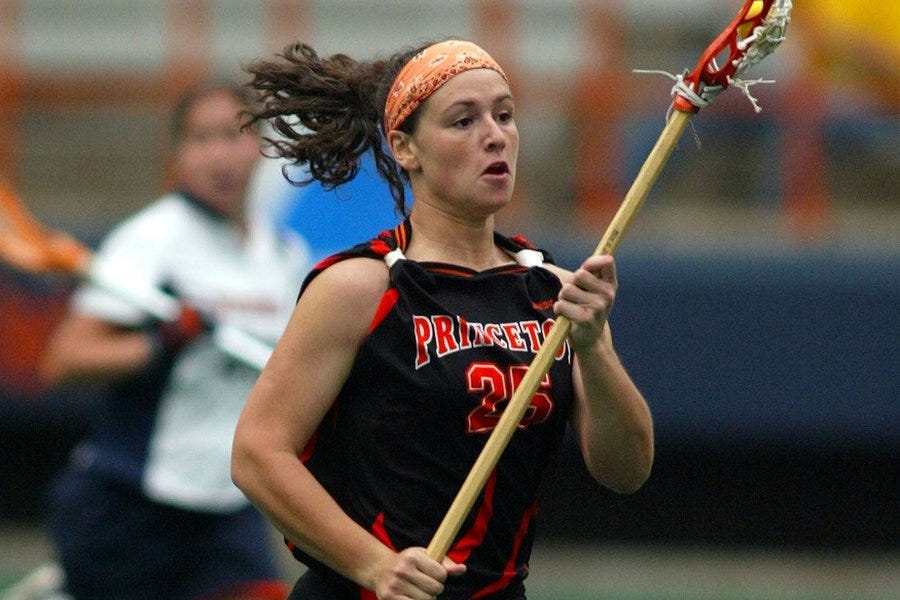
On the day that the US women begin their defense of their World Championship title in Tokyo, I wanted to talk to someone who could not only offer expertise as an elite player — she played at Princeton and for the US Team — but who could also look at the sport holistically: where we’ve been, where we are and where we’re heading.
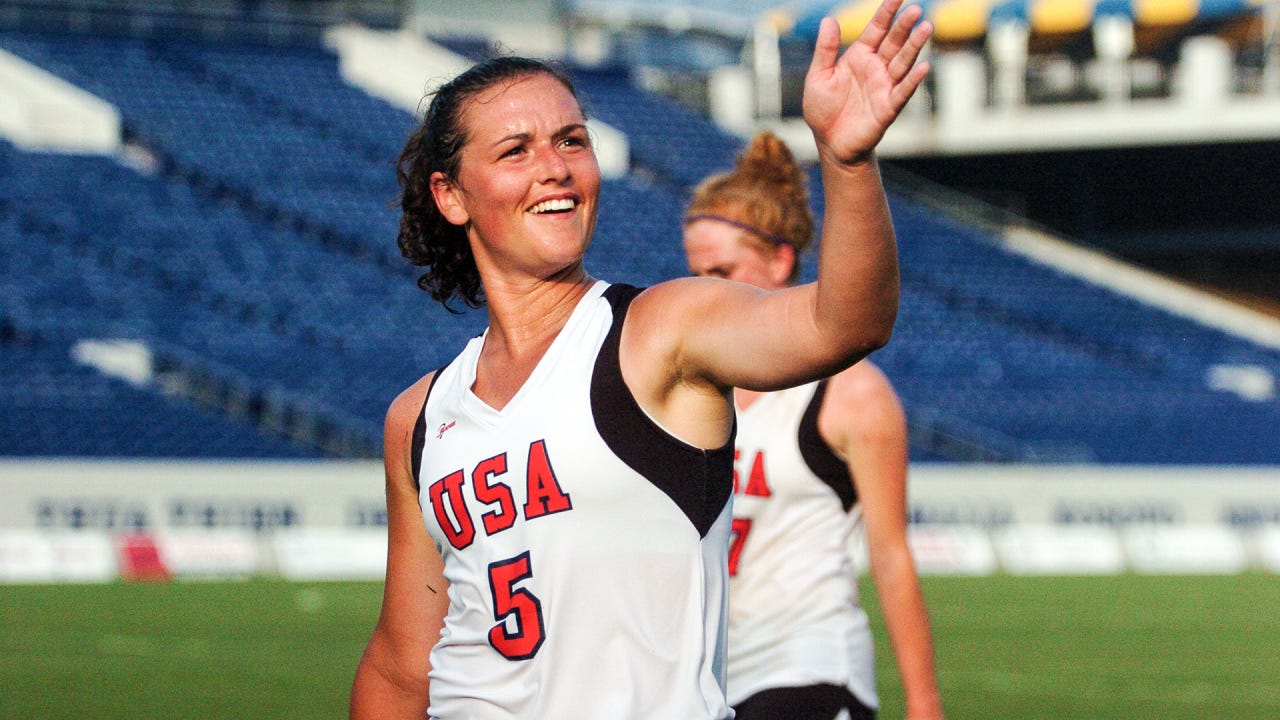
No one is better positioned to do so than Rachael Becker DeCecco: a three-time first team All-American, two-time NCAA Champion, World Championship silver medalist, Tewaarton winner, US Lacrosse Hall of Fame member, ESPN commentator and analyst, and the face of and force behind the Women’s Lacrosse League (WLL). As women’s lacrosse gallops forward with its promising professional league and an Olympic debut on the near horizon, it does so because DeCecco is holding the carrot of opportunity, wielding the stick of motivation and doing the work of the packhorse to carry us into the future.
Read on to discover where she was when Princeton coach Chris Sailer first phoned, why she believes the WLL is going to be a great success, what her advice is for players and parents and, of course, which team she thinks is going to win the gold medal in Tokyo.
Amory Rowe Salem: I want to throw it back to 1996 when you were in ninth grade. What were 14-year old Rachel Becker’s dreams and goals?
Rachael DeCecco: I went to high school at 13 because the birthdays were different back then. They called me The Freshman. I was super young and found myself on Varsity Field Hockey and realized how much I loved competing. I was always a competitor, but I think making Varsity my freshman year, playing with the big girls, having that experience, really changed things for me in terms of how I thought about what was possible. That was really it my freshman year. I mean, obviously the older girls were great and took me under their wing, much like at Princeton, but I was kind of a jock and just wanted to play sports.
ARS: So at what point did you start thinking about playing in college?
RD: Probably my sophomore year. I went to a public high school with really incredible women’s athletics. [Ed.: Marple Newtown High School in Newtown Square, PA.] My freshman year somebody went to play lacrosse at JMU, somebody went to play at the University of Virginia, somebody went to Virginia Tech. So I was able to see these women find places to play and that’s when I really started to think, “Okay, where do I want to go? What do I need to do to get there?” There weren’t a ton of events, though. I went to one Chestnut Hill Lacrosse Camp. But there were no clubs and no tournaments. In the summer, you were just training. But there was one field hockey tournament in November — The Festival — at Thanksgiving. And I remember going to that my sophomore year and feeling nervous for the first time. I was thinking, “People are watching this through the lens of: ‘Is this somebody who could play in college?’”
ARS: Where was Princeton on your radar screen? Was it ‘one of many’ or was it ‘one of one’?
RD: Well, I was a little bit of a brat. My parents wanted me to go to Princeton, which meant, “Oh, it can’t be the right choice.” So we toured my junior year and I have such a vivid memory of being outside the Burger King that used to be on Nassau Street and my parents saying, “This is so beautiful. It’s an hour away. It’s Princeton.” And I was probably one step short of crossing my arms and stomping my feet. I basically said, “I don’t want to go here. This isn’t right for me.” And then I got over that little teenage tantrum and narrowed it down to Princeton or Penn State. My best friend played at Penn State and had such a great time there and I felt a little bit of social pressure to go. But obviously, as I matured, I realized the opportunity that was Princeton and made the right decision. It took me a minute to get there. I say to my parents now, “How did you not shake me and say: ‘You have to go here!’?” And they say they just felt like they knew I would end up making the right choice.
ARS: That’s some A+ parenting right there.
RD: Right?
ARS: Do you remember when you committed to go to Princeton?
RD: I do. I have three moments, actually. My best friend was at Penn State. She’s my sister-in-law now. In high school I was dating my best friend’s brother, who is now my husband. We’re still best friends. She was at Penn State and her aunt is a Hall of Famer at Penn State, who I really looked up to. [Ed.: the multiple-time All-American Tammy Kirby, née Worley.] So I went to her and said, “I’m really struggling with this decision.” And she’s Penn State through and through, and in talking to her, I realized, “OK, I want to go to Princeton.” She didn’t say, “You should go to Penn State.” We talked it through and she helped me to realize what the right choice was. And that was one of those moments when I realized, “Okay, I’m committing there.”
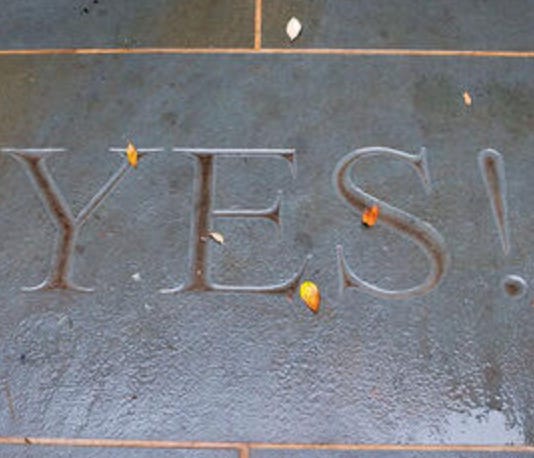
And then, second, we were on our way to a family dinner and my mom got the mail and she handed it to me and in it was the Dean [of Princeton Admissions] Fred [Hargadon] YES! letter on December 15th. I remember so vividly sitting in my parents’ Suburban and opening that letter, seeing that YES! in all capitals, and thinking, “Oh, this is real. We’re doing this.” And it was just amazing.
And then, third: back then you couldn’t get called until July 1st of your senior year. And I was so clueless. I was asleep. My mom woke me up and said, “[Princeton Head Coach] Chris Sailer’s on the phone. You gotta get up.” It was a lazy summer morning and I shot up. And now looking back I should have been way more scared. But I was perfectly clueless and I didn’t know to be as intimidated as I should have been. I didn’t even know that was the day when everyone was going to call you. But the calls started coming. Chris was my first one, though. And now I laugh. I’m like, “Oh my gosh, I was asleep.” She just called me early.
ARS: Yeah, there’s no way that happens anymore.
RD: No way.
ARS: I love that you were knuckling the sleep out of the corners of your eyes and Chris is on the on the line waiting to talk to the student-athlete who is going to carry her program through the next four years.
RD: [Laughs.]
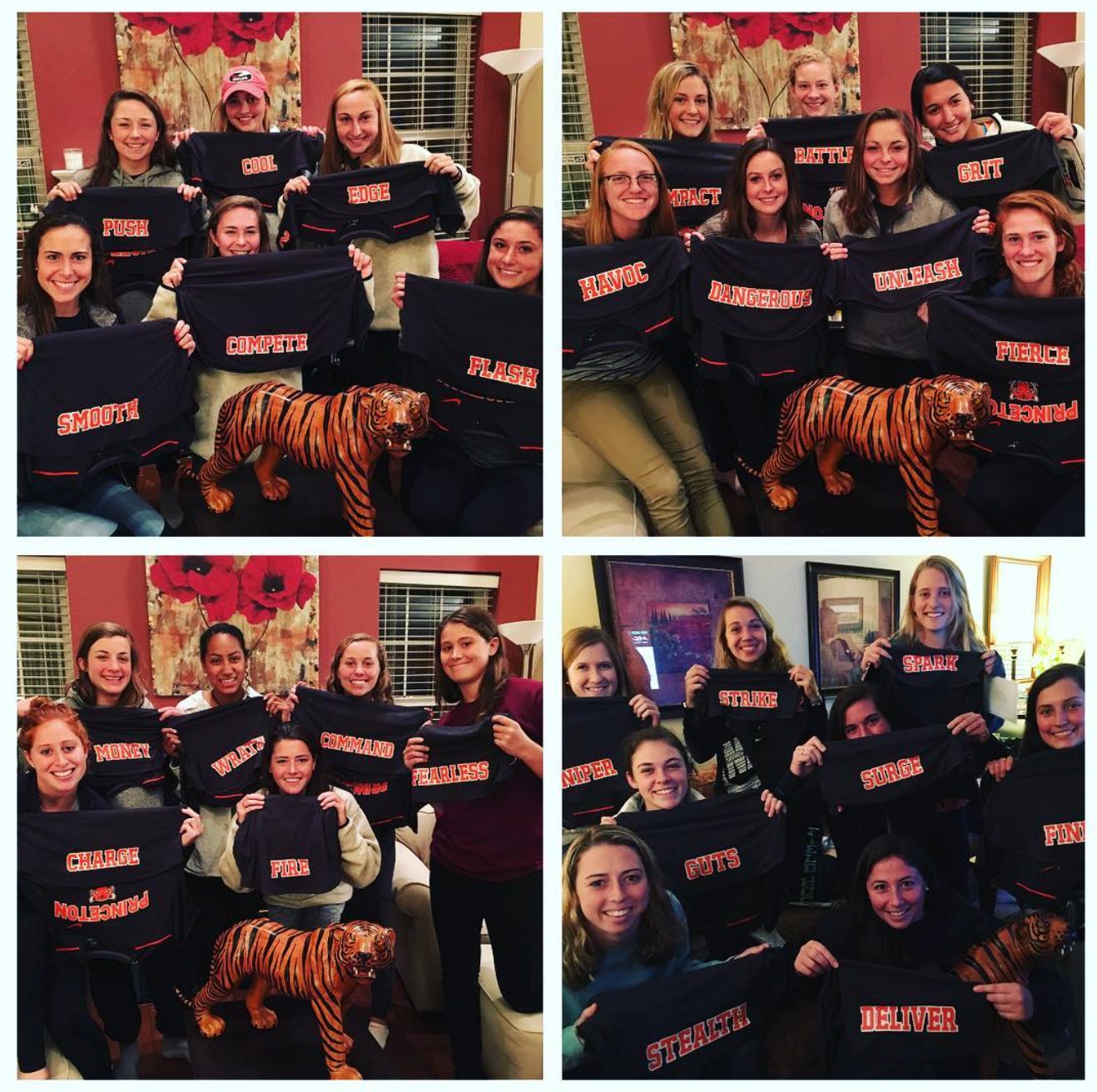
ARS: So obviously at Princeton we were big into the word shirts. Do you remember your words?
RD: Oh, yes! GRIT. RISK. COMPETITIVE. And then WRATH my senior year.
ARS: Wrath. That’s a special one.
RD: That was my favorite.
ARS: Are there foundational principles that guided your career as a student-athlete that have also informed your career as a sports analyst and commentator and as the chief architect of the WLL?
RD: I think I am very true to my principles. I am clear on what matters to me and what is important and what I value and I don’t stray from that. So when I was at Princeton, I needed to be a really great lacrosse player, a really good teammate and handle stuff in the classroom. And everything I did was built around those things. My priorities were very clear. My dad would say I’m just ridiculously persistent. He says, “You just don’t know how to give up on things that you want.” So there’s probably a little bit of that. I just don’t know how to quit sometimes when I maybe should. I think it’s just clarity of purpose. I wanted to win a national championship. That’s all. That’s what I wanted to do. And then I wanted to get a master’s [degree]. And we’re going to make women’s lacrosse a thing and professional. And I’m not going to stop until it happens.
ARS: How are you defining success at the WLL?
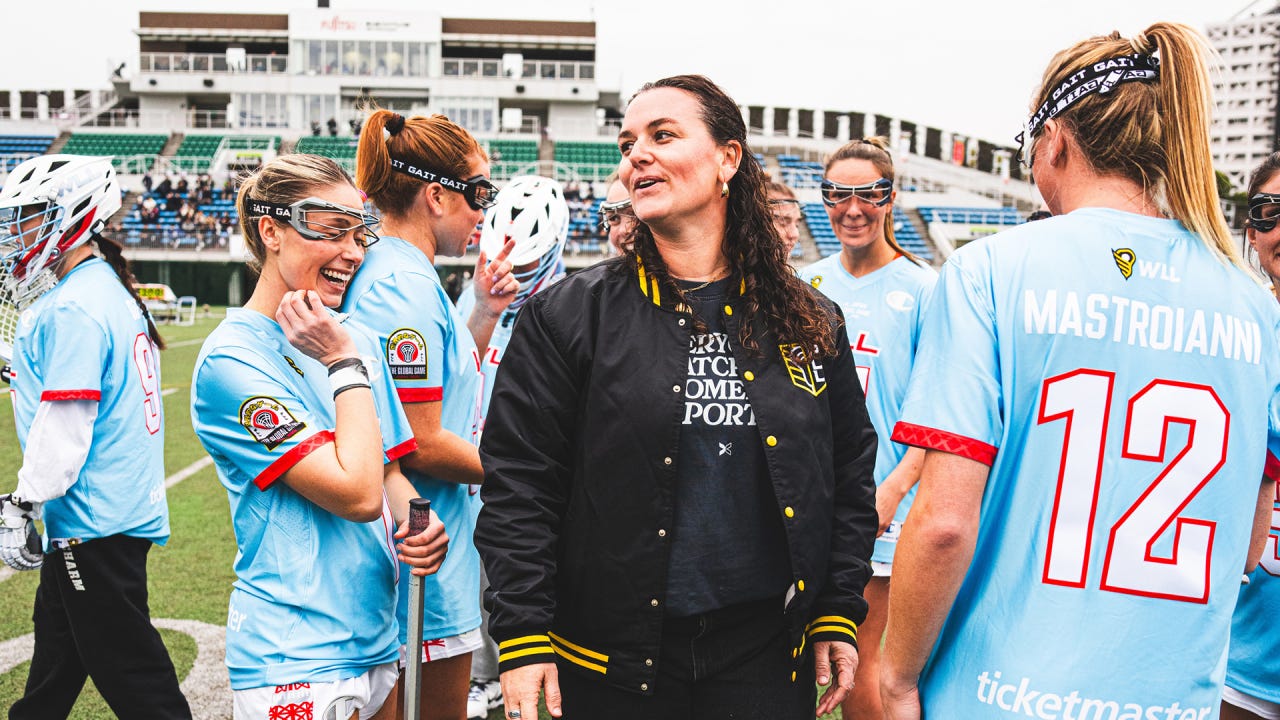
RD: There’s a couple of ways. One: the product that we’re putting out. I think women’s lacrosse, in the last few years, for better or worse, has gone through this transformation where we have the best, most athletic women playing and great advances in stick technology and we’ve forgotten to make that the thing. Instead it’s rules and stoppages and confusion and we’ve lost the plot around what these women are capable of doing. And one of the things I’m most proud of at the WLL is the product is really good. The women can do what they are best at and we’re not handicapping their skills because of the way the game is running. The entertainment value of the games is really high. So I would say that is one. Then obviously, we’re looking at tickets, we’re looking at social media — all the things that will indicate that the market is ready for it. Those are objective ways to look at it. But when I am at the games and I’m standing there watching, and I turn around and I see the people watching, I know in my bones it is going to be successful because you can’t bottle what people are experiencing. You really can’t.
Here’s a little story. So there are a lot of people working these games; and there’s this older man who sits behind our table. He does something with the broadcast wires and I’ve never really spoken to him, but he’s there all the time. And after the WLL game last weekend [in Fairfield, CT], he came up to me and he says, “You’re a pretty intense person.” And I said, “I am.” And he replies, “But I got to tell you, watching you last night turn around and look at those stands: you had a huge smile on your face. It was really good to see you having fun.”
ARS: I can speak to that from the perspective of somebody who loves the sport and who’s been in it a long time. I see kids from youth rec teams up to the high school level being super excited to go watch a pro game here in Boston next month [August 8th at Harvard Stadium]. It’s so exciting. So tell me: what will the WLL look like in five years?
RD: I think it’s going to be similar to what the NWSL [National Women’s Soccer League] is now. So: expansion teams, standing on its own, great attendance, good distribution. I think the Olympics is going to be another springboard in terms of exposure and investment. People want to invest in Olympic sports. I think it’s going to be on its own, doing great.
ARS: If you could wave a magic wand and make one change to women’s lacrosse, what would the one change be that would have the biggest, brightest impact on the sport?
RD: I think when you play lacrosse, you love it. And there’s too much of a barrier to entry right now. So I would make sure that more people can play and fall in love with it because then it just feeds everything. I think we need to get more kids playing all over the place.
ARS: I love that: broaden the top of the funnel, pull more kids in. How about one piece of advice for a young player getting into the game?
RD: You should always remember why you started playing.
ARS: One piece of advice for a high school player looking to play at the college level?
RD: Your journey is yours and nobody else’s.
ARS: And for college players?
RD: Never in your life will you get to live with your teammates like this. So enjoy every single second.
ARS: And a piece of advice for parents whose kids love the game?
RD: Your kids’ success is not yours. My daughter is a perfect example. Everyone says, “Oh, she must be a great lacrosse player!” And I say, “She doesn’t like lacrosse.” Actually, I would say she dislikes lacrosse. Some of it might be because people thought she should love it and be good at it and she just never liked it. And I never made her play. She played when she wanted to, but she discovered running and loves it. And I feel proud of me and her that we realized that your kid is going to do what they want to do. And if they don’t love it you can’t force it on them. So I think we parents need to let kids find what they love even if it’s not what we thought it was going to be.
ARS: Rachael, that brings our conversation full circle because you just enacted the A+ parenting that you described your parents gave you.
RD: [Laughs.]
ARS: Before we sign off, give me a prediction: which two teams are going to be in the final of the World Cup? And give me a score prediction for that gold medal game.
RD: It’s going to be USA v. Canada in the final. And I think USA will win by three.
ARS: Okay. There it is. USA by three. Thank you so much for the chat, Rachel. Go, Tigers. Go, USA!
***