No One Gets Recruited by Accident
Top Ten Tips for navigating the college recruiting process

No one gets recruited by accident.
It doesn’t matter what your sport is or in which division you’re aspiring to play, if at some point during your high school career, a coach offers to throw her support behind your college application with the aim of landing you on her team, that is the end result of months — and likely years — of practice, preparation, organization, communication and, yes, commitment.
For legions of high school student-athletes, that word — commitment — is the holy grail of athletic achievement. “Is she committed?” players will ask one another. “When did she commit?” or “Where did she commit?” The maelstrom of social media activity on these commitment days — September 1st for Division I women’s lacrosse players, for instance — is staggering.
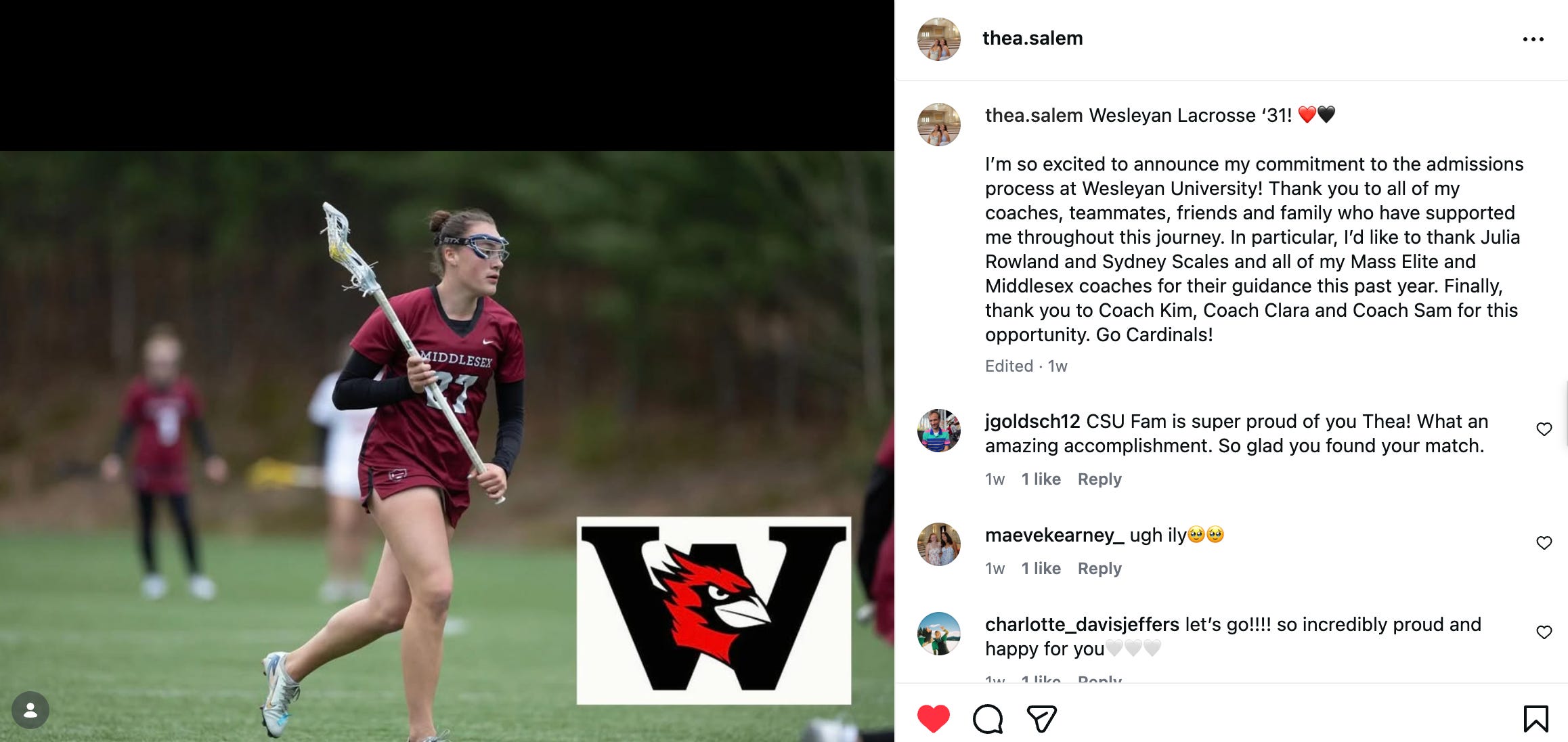
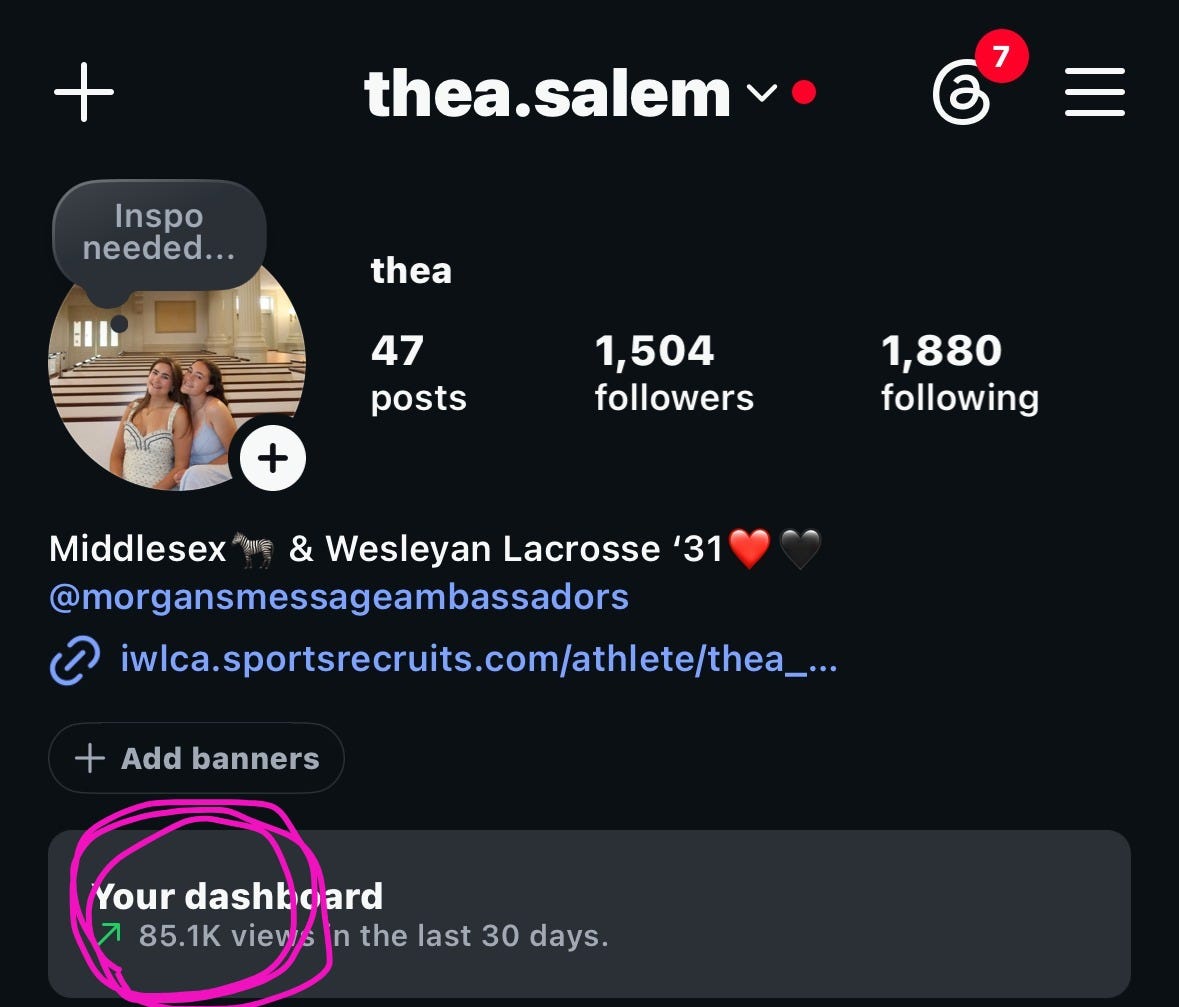
My daughter Thea, a 2027 defender who has committed to Wesleyan (CT) to play lacrosse, posted an announcement with her news on July 1st (the contact date for Division III NESCAC schools) and within 24 hours it had received over 80,000 impressions, according to Instagram. Kids she hadn’t spoken to since middle school commented and reposted it. Her club and high school teammates commented. My adult friends and former college teammates commented. Her future college teammates liked and commented. The news spread less like wildfire and more like the Boston Pops fireworks on the Fourth of July: a ceaseless, concussive explosion of congratulations.
Whether you’re talking marriage or college recruiting, getting to “yes” in the commitment department is no joke. It’s arduous; it’s stressful; it’s demanding; and it’s expensive. And yes, it’s hugely rewarding, too. (And not just for the external validation it offers in the form of a massive social media dopamine hit.) Student-athletes who “commit to the admissions process” effectively answer the biggest question of senior year — Where am I going to go to college? — many, many months before their grad year cohort starts nervously checking admissions portals for acceptances.
How many cumulative miles would you be willing to drive to earn that prize? How many winter weekends would you be willing to sacrifice, stacked like parental candlepins on the sidelines of nondescript indoor turf spaces, to resolve the college question months in advance?
If you’re up for complicating your family’s life in the near term to simplify your daughter’s path in the longer term, then this list is for you.
Here are our mother-daughter Top Ten tips for navigating the college recruiting process:
Emphasize process over performance. Your recruiting year is not a series of staccato on-demand performances for college coaches. It is a months-long process during which you will grow as an athlete and a person. Stay focused on that process. Seek day-to-day, week-to-week and season-to-season improvement. Understand that the showcases and the prospect days and the tournaments are part of the process; they’re opportunities to display and celebrate the regular work you’re doing outside the view of the public. The best compliment my daughter received throughout her recruiting year was from a college coach who told her, “You keep improving every time I see you.” By the time your recruiting year has come to a close, the college coaches whose programs you’re most interested in will have seen you play at least a dozen times. No single performance will make or break your chances. But stacking good — and maybe even great — sessions day after day and season after season will make an impression.
Get the shape of your recruiting year. No one wants to approach an important project without knowing the start line, the finish line and the critical checkpoints along the way. I run the Boston Marathon every April. When I’m standing in the start corral in Hopkinton on race morning, I know I’ve got 26.2 miles of running ahead of me and that I’ll use a dozen or more markers along the route to assess my progress. Without knowing the shape of the race, you can’t gauge your effort. Know your start and finish lines and your checkpoints. My daughter’s recruiting year starting gun fired on June 1st, 2025, 13 months out from the NESCAC contact date of July 1st, 2026, which was her finish line. In between we knew she’d play roughly three tournaments a season (a dozen in a year), show up at the prospect days of the schools in which she was most interested (another dozen or so events in a year) and attend at least one showcase a season. It adds up to about 30 events over 13 months. Taking into account that recruiting largely shuts down during the height of the college and high school seasons in March and April, it came out to roughly two or three events a month. It wasn’t every weekend; but it was almost every weekend. If you go into your recruiting year with a strong sense of where and when and why you’re playing each event, you’ll be better off for it. The perspective that comes with seeing the larger shape of the recruiting arc pays off in the form of much-needed resilience and endurance as the year unfolds.
Know your red lines. A savvy parent of a student-athlete one grad year ahead of my daughter confessed that by the end of her daughter’s sophomore summer, she was playing “sad lacrosse.” Don’t play sad lacrosse. Fatigue and even occasional burnout are inevitable. Know what they look like. Know what they sound like. Know what they feel like. And if your daughter is playing “sad lacrosse,” pull the plug. Get her home. Let her recharge. Live to fight another day. Nothing good will come from a burnt-out kid going through the motions because she feels she must. There’s no joy in that — and there’s potentially some harm.
Know your superpowers. The second to last thing I said to my daughter before she got out of the car at every prospect day, tournament and showcase was, “Tell me your superpowers.” She’d roll her eyes and huff, “Ugh, Mom.” But then she’d recite them. Three, four, five of them. I’d add a few if she was particularly reticent. But she exited the car and stepped onto the field for every public-facing session with a recently refreshed sense of what made her unique as a player. No athlete needs to be elite in every category of the game. If you’re a lights-out attacker with a half-dozen dodge packages in your back pocket, it doesn’t really matter if you can play great one-on-one crease defense. Or if you’re a crease defender, you don’t need to be super well-versed in how to execute the attacking two-man game on the elbow. But you better know what it is you do supremely well. And when the drills and sets and moments arise for you to put those superpowers on display, seize them the way Supergirl seizes the opportunity to correct injustice in Metropolis.
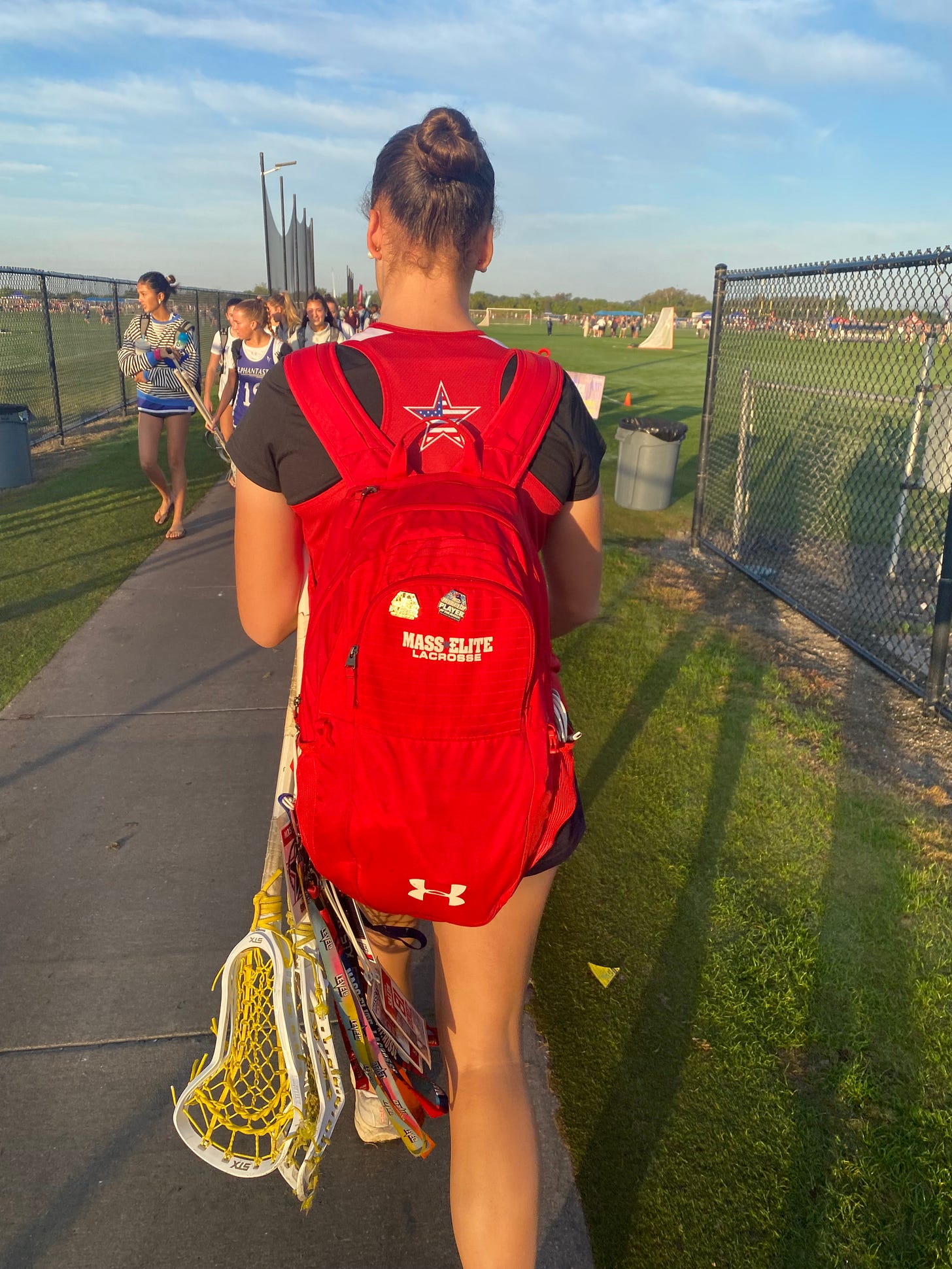
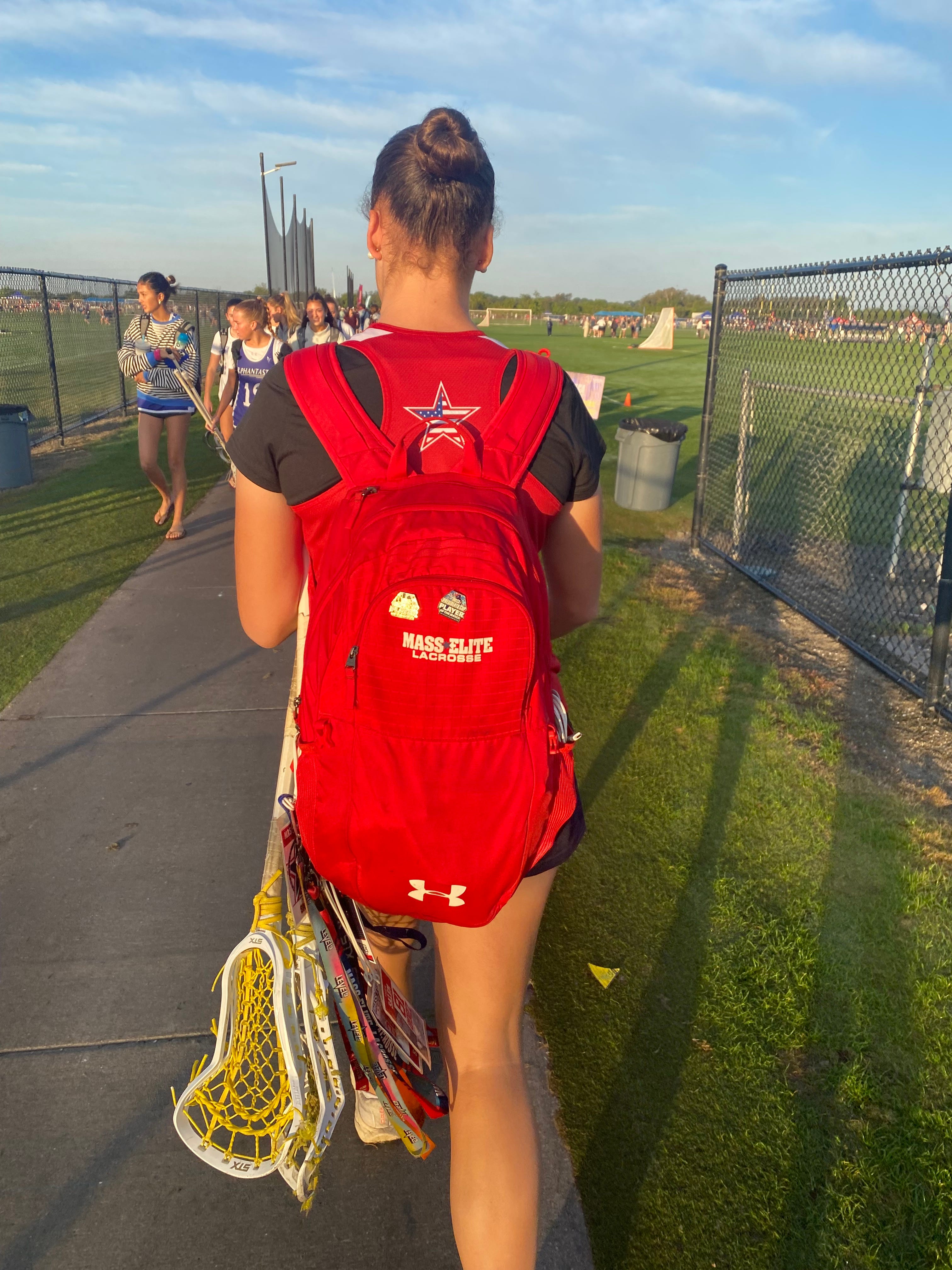
Morning of Day Two at the IWLCA Presidents Cup, November 2025 Ignore the voice that says you need to do everything. You do not. Know your list of colleges; attend those prospect days; pick the tournaments and showcases that work for your family’s logistics. Communicate your schedule on a seasonal basis to the coaches whose programs you’re most interested in. Register. Make flight and hotel reservations if need be. And then walk away with the confidence that you have a well-considered plan. Enough of this process feels like a black box mystery. You don’t need to add to the ambiguity by chasing coaches, adding last-minute events and suffering from FOMO for the duration of the recruiting year. You want to be in the saddle riding the dragon Targaryen-style, not at the whip end of its tail.
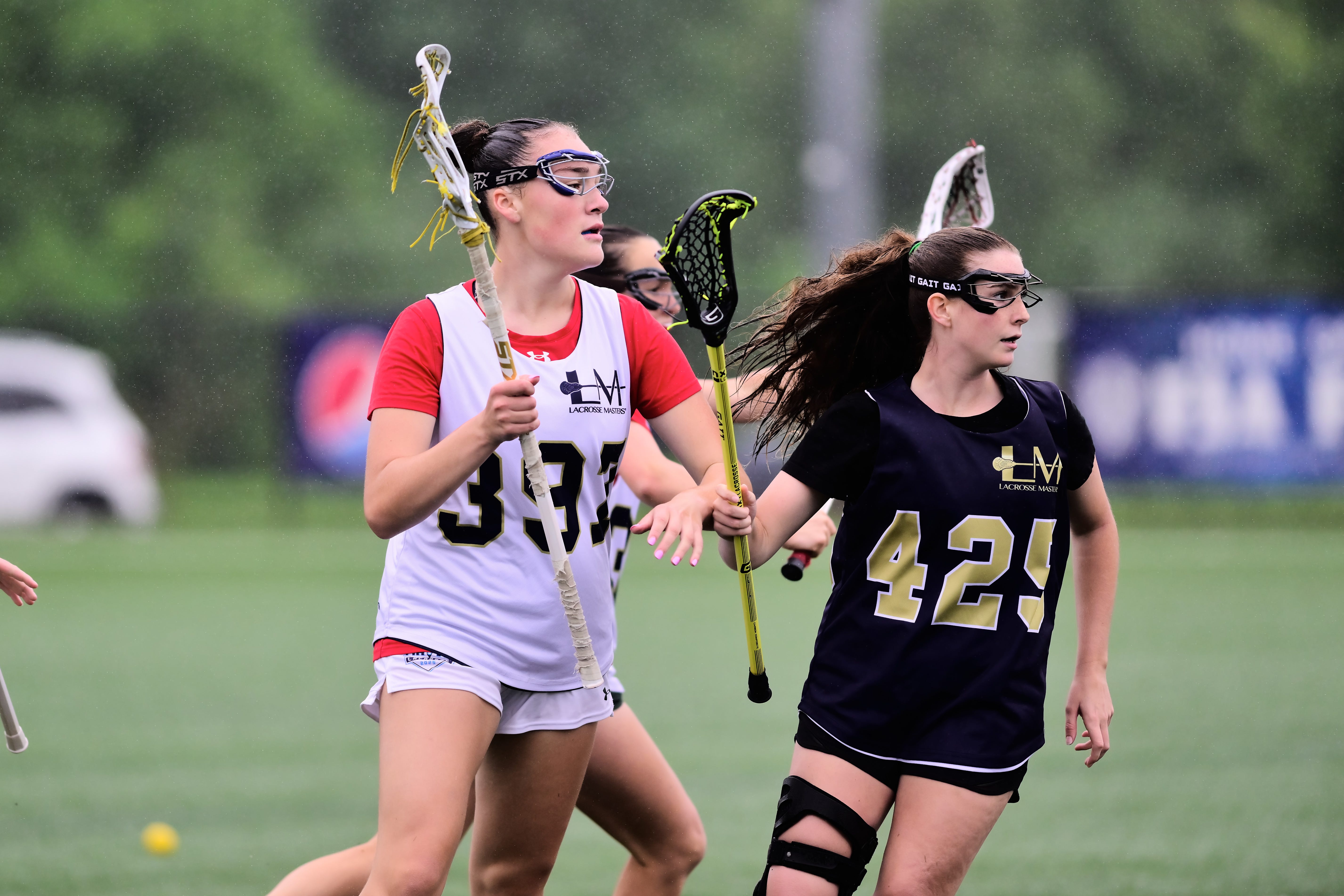
While you don’t need to do everything (see above), you do want to do Lacrosse Masters — or whichever events put you face-to-face in small groups with the coaches whose programs you are most keen to join. This tip was Thea’s first and best thought when we were brainstorming this list. (And no, we’re not on the Lacrosse Masters take!) The events that guarantee you sustained, small group exposure to college coaches are great for the obvious reason — the coaches see you play — but their real value is in the opportunity they give the student-athletes to assess the coaching styles and demeanors of the coaches themselves. The recruiting journey unfolds on a two-way street: yes, athletes are being evaluated; but so are coaching staffs. Players: take note of whose style resonates with you — and whose does not. One NESCAC school with an academic stronghold in my daughter’s specific area of interest — and an excellent lacrosse program to boot — got crossed off the list early in the process after Thea spent two days at a Lacrosse Masters event working with and observing the head coach. There was nothing unprofessional about the way the coach operated; I’m sure her team loves her. It’s just that her style wasn’t a match for Thea. And that’s OK. But you need to get face-to-face with these coaches to discover that.
Be curious. Ask questions: of college coaches, obviously, but also of fellow players and parents, of your high school and club coaches, and of the families who have walked the recruiting road before you. Approaching the year with a palms-up, let’s-find-out mentality keeps everyone firmly grounded in the growth mindset that is critical to keeping the year feeling fun, engaging and worthwhile. It will be tempting, as the recruiting year unfolds, to hive yourself off. We observed that families in the thick of it tend towards the perspicacious where sharing information about the recruiting process is concerned. (And understandably so). But we are each other’s best resources, parents and student-athletes alike. One of the reasons we wanted to publish this list is to put to work the hard-earned wisdom we accumulated over the course of the recruiting process. If it can help another family get their heads around the experience or help reduce the stress that stems from uncertainty, then we we are here for that!
Take the Waldorf approach to tournaments and showcases. Thea and I were both Montessori kids, but at some point along the educational road someone explained to me the Waldorf philosophy of expansion and contraction: students explore out in the world and then return to the classroom to focus on smaller, introverted tasks. Similarly, I once had a track coach from Jamaica who encouraged his runners to be sharp, quick, focused and fast whenever our feet were on the track; and when we were off the track, between sessions, he wanted us to move slowly, like molasses: relaxed and at ease in body and mind. You can’t be “on” for every waking hour. And you shouldn’t be. In order to put your best game on these high-stakes fields, make sure when you are off the field, you are “off.” So, parents, when your daughter hops into the car at the end of the first day of a two-day showcase, do not pepper her with questions about the drills and coaches and how she played and who else was there. Ask her instead what she wants for dinner. Offer to take her to a movie. Go sit in a dark theater and get transported into another world entirely for a couple of hours. Back at the hotel, tell her you love her, that she’s doing a great job. And in the morning, on the way back to the fields for Day Two, then you can start to help her focus her mind on the work ahead. She’ll be more mentally fresh for having had the opportunity to walk away —psychologically at least — from the sport and the process for a few hours.
Build relationships. Your ability to stand out on a field of play will get your foot in the door. Your ability to make the case that you’ll contribute mightily to the culture of the team will land your feet in the locker room. Ultimately coaches recruit people, not jersey numbers. Once you’ve emailed a coach and attended a prospect day, send a follow-up note. Thank the coaching staff for their time and feedback. Write in your voice; make it personal, candid and authentic. Do this every time you get a chance to interact with coaches in an extended way: after a mid-season phonecall, after a campus visit or a clinic, after small group work at a showcase or tournament. Know the names of the coaches on the staffs of all the colleges you’re exploring. When you see them “out in the wild,” say hello. Make eye contact, shake hands, re-introduce yourself, engage. Two weeks out from the NESCAC contact date, Thea was spectating at an MIAA state tournament game and saw an assistant coach from one of her favorite schools in the stands. Seven months earlier we’d spent an hour touring the athletic facilities with this coach and she’d made a hugely favorable impression. Thea waited until halftime so as not to distract the coach from her scouting work and then walked up and said hello. It was a quick and light interaction, but it felt important. Two weeks later, Thea committed to play her college lacrosse there. Lean into the human side of the recruiting process. Yes, coaches want speed, agility, stickwork and smarts — but they also want great kids, good teammates and confident humans.
Finish strong. Our family’s foundational principle when organizing the recruiting year was to have no regrets on the contact date. In other words, we wanted to make sure to do everything we could to have the options we wanted at the end of the process. If we did that, we felt like we could live with the results, whatever they might be. But we didn’t want to get to July 2nd and say, “I really wish we’d made the effort to get to that last prospect day” or “In retrospect we should have done that February LineUp event.” More than a few times we returned to that tenet — Have no regrets — when deciding whether to put an event on the calendar. You don’t want to leave juice in the orange. Squeeze it. We’ve all seen those heartbreaking moments when a runner is charging towards the finish line, seemingly assured of victory, hands thrown skyward in celebration, only to have a cagey competitor make a last push for the finish and nab the victory out from under her. Be the cagey competitor. Don’t be the cautionary tale who gets caught celebrating early. Push hard for the finish line. Take nothing for granted. Run through the tape. Leave no room for regret.
Happy recruiting! Onwards!
Amory & Thea